top of page
Image by Olga Thelavart

Robert Owen

From Welsh Prodigy to Utopian Visionary

Robert Owen (1771-1858) was a Welsh social reformer and industrialist who pioneered the cooperative movement and improved factory working conditions, advocating for workers' rights, shorter working hours, and education for children at a time when the Industrial Revolution created harsh labor conditions. In 1825, he purchased the town of New Harmony, Indiana, and attempted to establish a utopian cooperative community based on his socialist principles, though the experiment was short-lived, ending after two years. 

​

Learn about his life and explore his legacy here.

Robert Owen_edited_edited.png

Biography

Robert Owen's life was a remarkable journey from humble Welsh beginnings to international fame as one of the nineteenth century's most influential and controversial social reformers. Charismatic, imaginative, and generous-hearted, he was also undeniably an egotist. Those who knew him described him as an efficient industrialist, a man who was kind and positive, but one whose thinking sometimes showed a "total lack of reason," as contemporary English writer Harriet Martineau observed despite her great admiration and affection for him. His transformation from successful cotton manufacturer to utopian visionary took him from the mills of Scotland to a small town in southwestern Indiana, leaving a legacy that shaped labor rights, cooperative movements, and socialist thought across two continents.

​


A Welsh Beginning

Born in Newtown, Wales, in 1771, Robert Owen was so bright that by age seven he had become his teacher's assistant, quickly exhausting what his local schoolmaster could teach him. He found his real education in the libraries of local professionals and through voracious reading that fed his hungry, imaginative mind. At just ten years old, Robert left Wales for London to seek his fortune, beginning apprenticeships in the drapery trade that took him from Stamford to London and finally to Manchester. These positions gave him exceptional business training and made him an expert in textiles and commerce by age eighteen, a rapid rise that would characterize his entire career.

​

Industrial Success and Enlightenment Ideas

After brief ventures in cotton manufacturing that demonstrated his business acumen, Robert boldly secured a manager position at Drinkwater's Bank Top Mill in Manchester before his twentieth birthday. Taking charge of 500 workers, he proved himself a remarkably successful innovator who improved both yarn quality and worker conditions. His reputation for combining excellent management with progressive treatment of employees spread beyond Manchester, setting the stage for his next great opportunity.

​

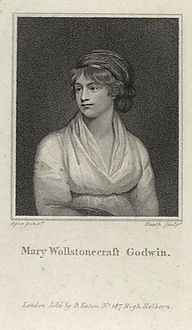
During these Manchester years, Robert immersed himself in Enlightenment philosophy, engaging with the ideas of Jean-Jacques Rousseau, Jeremy Bentham, William Godwin, Thomas Paine, and Mary Wollstonecraft. He contributed his own papers to the Manchester Literary and Philosophical Society, exploring connections between happiness, mechanics, and social improvement. Importantly, Robert's intellectual interests weren't merely theoretical. He joined the Manchester Board of Health to actively promote improvements in factory workers' health and working conditions, beginning to merge his philosophical beliefs with practical social reform.

​

​

​

​

​

​

​

​

​


​


New Lanark: A Laboratory for Social Innovation

Robert's partnership in the Chorlton Twist Company led him to Glasgow, Scotland, where he met and fell in love with Caroline Dale, daughter of prominent banker and industrialist David Dale, owner of the New Lanark cotton mills. Owen and his partners purchased the mills in 1799, and despite their religious differences — Robert's secularism versus Caroline's devout Christianity — their marriage in September 1799 was happy. It produced seven children who grew up at New Lanark with an unusual emphasis on play, music, and fresh air. Caroline tolerated Robert's increasing absorption in public affairs that kept them apart for long periods in later years, demonstrating a patience that many would find remarkable.

​

By age twenty-five, Robert Owen had become manager of the New Lanark Mills, and those who worked with him recognized him as an efficient industrialist with a profound concern for the welfare of human beings, especially mill workers and children. At New Lanark, he proved himself a disciplined and meticulous manager who transformed the mills into a highly profitable business. He expanded production, introduced rigorous controls, and earned a reputation for strictness tempered by fairness. His decision to continue paying wages during a trade crisis in 1807 won workers' lasting trust and demonstrated that his concern for human welfare was genuine.

​


Between 1799 and 1813, Robert made New Lanark both commercially successful and a laboratory for revolutionary social reforms. He phased out child labor, established a sickness fund and free medical care, built a village store, introduced street cleaning services, and created an innovative education system that served the entire community. In doing this, he demonstrated that profit and progressive worker welfare could coexist, which was a radical notion that challenged conventional industrial wisdom.

​

When Robert arrived at New Lanark in 1800, he inherited from his father-in-law David Dale a well-established school system serving over 500 students with sixteen teachers. Though Dale's schools used traditional methods and were far more limited than Robert's later revolutionary Institution for the Formation of Character, they reflected Dale's sincere belief that he had a responsibility to ensure the children in his care could leave New Lanark prepared for life. This was a foundation that Robert would dramatically expand with his own educational philosophy.

​

Educational Revolution and Growing Controversy

Robert's grand vision for education sparked a crisis with his business partners in 1813, but he successfully secured new investors, including philosopher Jeremy Bentham and several Quakers, who shared his commitment to using profits for social improvement rather than personal wealth. The resulting Institution for the Formation of Character, opened in 1816, offered a radically joyful alternative to traditional education. Children learned through play, music, and exploration in bright classrooms filled with pictures and maps, while the community enjoyed the world's first school playground, workplace nursery, evening classes, and educational programs that proved learning could be engaging rather than punishing.

​

​

​

​

​

​

​

​

​


Important to Robert's character was his belief that environment determined character. He saw marriage, the church, and ownership of private property as deterrents to his vision of a "New Society," in which a person's character would be formed by circumstances and where individuals would receive neither punishment nor praise based on supposed free will. These radical views, combined with his professed atheism, made him increasingly controversial. Owen believed religion was a superstition and had studied all the world's religions, concluding that the church failed in its duty to the poor and helpless. In 1825, a contemporary called him a "Master Spirit" and said he was "the most amiable and benevolent of men but was totally without Christianity," an assessment that captured both his appeal and the source of much opposition to his ideas.

​

While running New Lanark, Robert became an energetic campaigner for factory reform, publishing influential critiques of child labor and industrial conditions, traveling widely to inspect factories, and implementing progressive practices at his own mills. This included shorter working hours, innovative discipline through "silent monitors" rather than corporal punishment, and comprehensive community support. Inspired by his success at New Lanark and Elizabeth Fry's prison reforms, Robert developed his ambitious "Villages of Unity and Mutual Co-operation" plan, which he outlined in publications from 1817-1820. He proposed self-sufficient communities arranged in parallelograms with shared agricultural land, workshops, schools, and communal facilities, governed by democratically elected committees, and nineteen rules promoting employment, temperance, religious tolerance, and mutual happiness. His plans knew no bounds, and his idealism would later inspire dozens of utopian communities worldwide.

​

​

​

​

​

​

​

​

​


​​


The New Harmony Experiment

When Robert's factory reform campaigns failed to persuade other British manufacturers and his outspoken opposition to organized religion made him increasingly unpopular in Britain, he looked to America for a fresh start. He was pleased to have the opportunity in 1825 to buy Harmonie, Indiana — a completely developed community built by the Harmony Society — to begin his utopian dream. Owen renamed it New Harmony and brought his second son, William, and a capable follower, Captain Donald McDonald, with him to Indiana, leaving his eldest son to manage New Lanark. His other three sons and one daughter followed him, though his other daughters stayed with their mother, Caroline. Robert Owen had educated his sons well; they were loaded with talent and would prove to be Owen's greatest contribution to America.

​

One of Owen's greatest successes was attracting Marie Duclos Fretageot and, through her, geologist William Maclure as a partner in his utopian experiment. Maclure's friends and fellow scientists were certainly responsible for contributing to the spirit that affects New Harmony today. The partnership brought Maclure's substantial financial resources and his network of scientists, educators, and artists to New Harmony, most famously aboard The Philanthropist keelboat, celebrated as the "Boatload of Knowledge."

​

New Harmony attracted many people in 1826. It became a community rich with intellectual talent but weak in practical skills. Robert Owen's New Society was doomed to failure for a number of reasons. Two principal problems were that he gathered too many disparate people too quickly to ever expect them to be properly homogenized, and that he spent far too little time in New Harmony to get his organization properly running. His followers, for the most part, had enormous faith in him. An Owenite named William Pelham insisted during community distress that "things will go better soon after the return of Mr. Owen. The more I see of Robert Owen the more I am convinced of his prudence, wisdom, integrity, and benevolence." Yet this faith couldn't overcome the practical challenges of creating a functioning community from such diverse and often impractical members.

​

Though Robert's community dissolved after just two years, and he returned to Britain in 1828 poorer but undeterred, New Harmony's legacy flourished through its many American "firsts": the first kindergarten and infant school, first free public school system, first free library, first trade school, first civic dramatic club, and one of the first women's clubs, the Minerva Society. Those Robert Owen attracted — family, friends, and followers — may be said to be his greatest legacy. His sons Robert Dale, William, David Dale, and Richard Owen each left a rich heritage in America, all becoming American citizens who carried forward their father's reformist spirit through distinguished careers and helped sustain the town's intellectual culture.

​

​

​

​

​

​

​

​

​

​

​


Return to Britain and Continued Activism

After the deaths of his wife Caroline and two daughters in 1832, Robert threw himself back into British reform work. He helped establish the Grand National Consolidated Trades Union, led protests, and founded the innovative but short-lived National Equitable Labour Exchange that used "Labour Notes" based on labor time rather than traditional currency. Though perhaps too paternalistic to lead the working class successfully, Robert at age sixty-four founded the Association of All Classes of All Nations (later called the Rational Society), which by 1840 attracted 50,000 members to weekly lectures and published the widely read New Moral World newspaper.

​

His controversial views on religion as divisive and marriage as a terminable civil contract made him enemies among the clerical establishment and led to attacks on Owenite democratic socialism across Britain, including debates in the House of Lords. Yet his influence continued to spread. Robert's ideas inspired many Owenite communities across Britain, Ireland, Europe, and America, including influential later developments like the Familistère at Guise in France and English model villages like Saltaire and Port Sunlight.

​

Queenwood in Hampshire became Robert's last direct community attempt when the Rational Society purchased 533 acres in 1839, but it disbanded in 1845 after his grandiose, expensive plans lacked sufficient practical agricultural and manufacturing skills. Its well-equipped school continued as Queenwood College founded on Owenite principles. The pattern repeated itself: Robert's vision inspired excellence in education even when his broader community experiments failed.

​


Legacy and Lasting Influence

During his last years, Robert became increasingly sad, isolated, and dismissed as slightly mad, despite converting to spiritualism and continuing to write and speak. He died November 17, 1858, in his birthplace of Newtown, Wales, and was buried in St. Mary's churchyard, where the Co-operative Movement erected a memorial in 1902. Newtown honors its famous son with a statue of Robert Owen and The Robert Owen Memorial Museum located at The Cross in Broad Street, preserving the legacy of the man whose radical ideas about social reform began in this small Welsh market town.

​

​

​

​

​

​

​

​


Robert Owen's legacy endured through the international Co-operative Movement and through ideas that modern scholars find surprisingly relevant, including his emphasis on gender equality, environmental concerns, humane labor treatment, children's education, and cooperative ownership as a middle way between exploitative capitalism and state communism. New Lanark became a UNESCO World Heritage Site in 2001, not only as an industrial heritage site but because Robert's social innovations — his integration of business success with worker welfare, environmental consciousness, and community development — demonstrated his eternally optimistic belief that through proper education and beneficial employment, society could be freed from crime, poverty, and misery, preparing humanity for a coming millennium of intelligence, morality, and happiness.

​

​

​

​

​

​

​

​

​


The desire for alternative communities has never been extinguished, and modern examples demonstrate Robert Owen's enduring influence on communal living experiments. His contradictory nature (practical industrialist and impractical utopian, efficient manager and dreamer of impossible dreams) reflected the tensions inherent in all attempts at radical social transformation. As Harriet Martineau recognized, there may have been a lack of reason in some of his thinking, yet his vision of a more humane, cooperative society continues to inspire reformers nearly two centuries after his death.

​​

​

​

​

​

​

​

​


In New Harmony, Robert Owen's family connection endured for generations. Through the dedication of his descendants, New Harmony evolved from short-lived utopian experiments into a carefully preserved historic site and close-knit community that honors both the bold vision of 1825 and the remarkable scientific, educational, and cultural achievements that flourished in its aftermath. Robert may have failed to create his perfect society, but the people he attracted to New Harmony, particularly the scientific and educational minds brought by William Maclure, created something perhaps more valuable: a lasting center of learning, culture, and progressive thought that enriched American intellectual life for generations.

​

Robert Owen left Wales at age ten to seek his fortune and found far more than financial success. He became a pioneer of industrial reform, a champion of education, and a visionary whose ideas about human potential and social organization continue to resonate. Though his utopian experiments were short-lived, his fundamental insight that people flourish in environments that support their development and dignity has proven both enduring and transformative.

2015155.jpg
EM15223_edited.jpg
1243400.jpg
484384_edited.jpg
416574.jpg
1806168.jpg
new_lanark_website_edited.jpg
robert owen museum.png
Image by Olga Thelavart

Works Cited

Donnachie, Ian L. Robert Owen: Owen of New Lanark and New Harmony. Tuckwell Press, 2000.


Kimberling, Clark. "Robert Owen." Accessed November 14, 2025. https://faculty.evansville.edu/ck6/bstud/robtowen.html.​


Walker, Janet R. Wonder Workers on the Wabash. Historic New Harmony, 1999. ​

How to Cite This Page

APA

Owen-Maclure 200 Committee. (2025). Robert Owen. URL

​

MLA

Owen-Maclure 200 Committee. "Robert Owen." Owen-Maclure 200, 2025, URL.   

​

Chicago

Owen-Maclure 200 Committee. "Robert Owen." 2025. URL.

bottom of page